


I have researched diverse user groups to better understand their needs, identify pain points and opportunities, and co-design solutions with the end users. Through such processes, I developed strategic recommendations for products and policies, and developed them through iterative processes that involved phases of prototyping and testing. I have seen tremendous benefits to this approach in addressing the right problems and bringing down the costs of design, however, engaging end users especially for a positive social outcome can be challenging. Collaborative design with empathy means that we continuously need to ensure that we understand our co-creators’ experiences and cultures, cultivate buy-in, provide a space for them to be truthful even when it is challenging and identify power relations at play that might affect the design process.
The Cambridge SupTech Lab aims to empower financial supervisors to lead innovation through the deployment of new suptech applications and the digital transformation of their agencies. My expertise in HCD will help the team shape an environment conducive to safe, respectful and productive collaboration. A critical question that will drive us as always through this process is ‘How do we continue to provide a collaborative and safe space to allow our supervisors to openly share their pain points?’ We are deeply cognizant of their challenges as they refine their processes and integrate new products – that must deliver at scale or affect a large population, that must circumvent multiple stakeholders’ conflicting interests, but most importantly, that must have high compliance with privacy and consumer protection standards. We will mindfully employ HCD to create opportunities for supervisors to take fresh perspectives to design, with special attention paid to the following three areas.
Capacity building
Developing suptech applications requires supervisors to collaborate with multiple stakeholder personas (researchers, fintechs, technologists and data scientists) with diverse and sometimes divergent inputs, interests and capacity needs. This calls for capacity-building activities for supervisors to demystify the HCD processes and help them better collaborate with the different stakeholders. Through the Leadership Programme, supervisors will have the opportunity to learn how to create innovative applications using HCD processes, uncover insights and opportunities from different stakeholders and bring their ideas to life through prototypes.
Co-creation
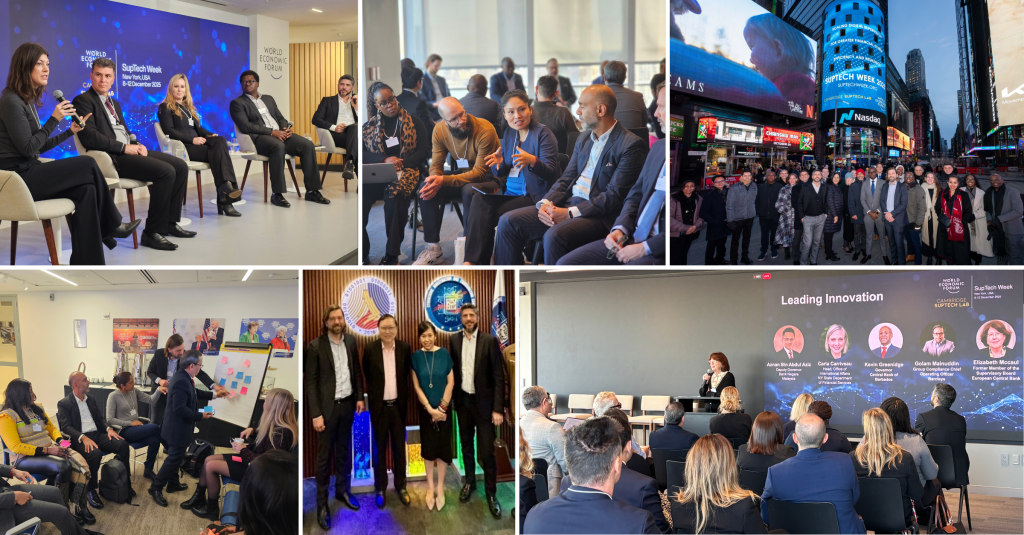
Leveraging the learnings from the capacity-building activities, supervisors will be able to apply their new skills to the process of co-creation of new suptech applications. In design sprint and workshops, the Cambridge SupTech Lab Innovation Leaders will crowdsource ideas on how to solve their problems and conceptualise the solutions. The supervisors will (i) generate a wide variety of ideas, (ii) evaluate every idea together and select the most promising ideas that later will be prototyped and tested, (iii) translate selected ideas into prototypes and (iv) validate the prototypes through testing with real users.
To be truly creative, they will need to be bold and propose big ideas that sound ridiculous. They will need to step out of their comfort zones and not be scared of criticism. This will be especially critical for them as they develop their mindset, skillset and toolkit to innovate. Throughout this process, the Lab will be cognizant of the need to provide a ‘safe and supportive space’ where regulators/supervisors can feel safely vulnerable in their ideas, which serves as a foundation for trust. The spaces will defer judgment and encourage participants to think creatively, share their current pain points, ask the so-called ‘stupid questions’, build upon each other’s ideas and allow for healthy conflict.
Community of practice
As the saying goes, ‘Knowledge is power. Sharing knowledge is the key to unlocking that power.’ Therefore, the regulators/supervisors will be part of a community of practice (CoP) that provides them with an opportunity to build morale and generate excitement around shared competencies, as well as novel digital tools and online forums (e.g. the Regulatory Knowledge Exchange, or RKE) to support their collaboration. The CoP will be a safe space where they feel comfortable sharing experiences and ideas. It will incorporate new and diverse ideas, ensure that the members are actively engaged and continuously adapt and refine.